

1. Introduction: The Modern Dilemma in Auditorium Display Technology
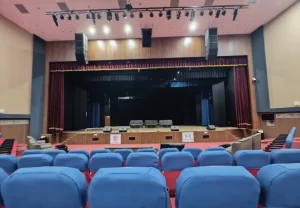
In 2025, the expectations from auditorium display solutions have evolved drastically. Whether it’s a corporate seminar, a college annual day, an international conference, or a cultural performance, the audience demands crisp visuals, vibrant colors, and immersive experiences. Event organizers, architects, and technical teams are now faced with a key decision: LED walls vs projectors — which is the smarter investment for their space?
Auditoriums in India, from educational institutions in Tier-2 cities to corporate hubs in metro areas, face unique challenges: varying lighting conditions, diverse event requirements, and budget constraints. Both LED walls and projectors have come a long way, offering powerful solutions — but each shines (literally and figuratively) in different scenarios.
This blog dives deep into LED wall benefits and projector advantages, comparing them across technical performance, cost, and maintenance. By the end, you’ll have a clear roadmap to selecting the best display for auditoriums in 2025.
2. Understanding LED Walls – Features, Advantages & Limitations
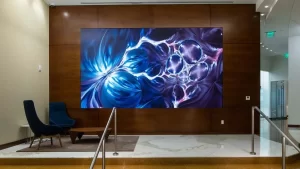
An LED wall is essentially a large, seamless display made from interconnected LED panels. Each panel contains thousands of tiny light-emitting diodes that directly produce light and color.
2.1 Key Features of LED Walls
-
Seamless Display: No bezels or borders, ensuring an uninterrupted viewing experience.
-
High Brightness Levels: Ranges from 800 nits to over 5000 nits, ideal for well-lit environments.
-
Scalable Size: Modular panels allow custom sizes to fit any auditorium wall.
-
Durability: Can last over 100,000 hours of operation.
2.2 Advantages of LED Walls
-
Superior Brightness and Visibility – Perfect for auditoriums with natural light streaming in.
-
Vivid Color Reproduction – Deep blacks, true whites, and wide color gamuts.
-
Low Maintenance – No lamps or filters to replace.
-
Energy Efficiency – Modern LED panels consume less power than old projection systems.
-
Multi-Content Display – Can split screens for presentations, videos, and live feeds simultaneously.
2.3 Limitations of LED Walls
-
Higher Initial Cost – Significant upfront investment compared to projectors.
-
Pixel Pitch Considerations – For close viewing, a smaller pixel pitch is needed, which increases cost.
-
Permanent Installation – Not ideal for spaces needing frequent screen relocation.
3. Understanding Projectors – Features, Advantages & Limitations
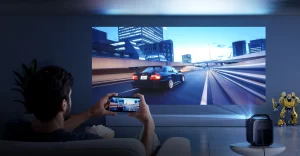
Projectors have been the go-to AV setup for auditoriums for decades. They work by beaming light through a lens onto a screen, creating large images suitable for presentations, movies, and events.
3.1 Key Features of Projectors
-
Variety of Technologies: DLP, LCD, and laser projectors.
-
Large Screen Sizes: Can project up to 300 inches or more.
-
Flexible Installation: Ceiling-mounted, rear-projection, or portable setups.
3.2 Advantages of Projectors
-
Lower Upfront Cost – Affordable for small to mid-sized auditoriums.
-
Portability – Easier to move or replace compared to a fixed LED wall.
-
Flexible Screen Size – Can easily adjust projection dimensions.
-
Good for Dark Environments – Delivers cinema-like experiences.
3.3 Limitations of Projectors
-
Lower Brightness in Daylight – Washed-out images in well-lit rooms.
-
Ongoing Maintenance Costs – Lamp/laser replacements, filter cleaning.
-
Shorter Lifespan – Typically 20,000–30,000 hours for laser models.
-
Image Quality Degradation – Colors fade over time.
4. Technical Comparison: LED Walls vs Projectors
Below is a quick technical table comparing the two technologies:
| Feature | LED Walls | Projectors |
|---|---|---|
| Brightness | 800–5000+ nits, excellent for daylight | 2,000–6,000 lumens, best in dark rooms |
| Color Quality | Superior, high contrast | Good, fades with time |
| Lifespan | 80,000–100,000 hours | 20,000–30,000 hours |
| Maintenance | Low | Medium to high |
| Installation | Fixed, scalable panels | Flexible, portable options |
| Upfront Cost | High | Low to medium |
| Operating Cost | Low | Higher over time |
| Best Use Case | Bright, multi-purpose halls | Dark, cinema-style halls |
4.1 Performance in Indian Conditions
-
LED walls handle bright, ambient light — ideal for auditoriums in schools, corporate offices, or cultural centers where lighting control is minimal.
-
Projectors are still favored in budget-conscious setups or venues prioritizing dark-room cinema experiences.
4.2 Future-Readiness
LED technology is rapidly adopting 4K, HDR, and AI-based auto-calibration, making them more future-proof than most projectors.
5. Cost, Maintenance & Lifespan: What Works Best for Your Budget
5.1 Cost Analysis
-
LED Walls: ₹12–25 lakh+ for mid-to-large size setups in India.
-
Projectors: ₹2–8 lakh depending on brightness and lens type.
5.2 Maintenance
-
LED walls: Occasional module replacement, dust cleaning.
-
Projectors: Frequent lamp/laser servicing, filter cleaning, recalibration.
5.3 Lifespan & ROI
-
LED walls last up to 3× longer than projectors and retain color accuracy.
-
Projectors require replacement after 5–7 years for optimal performance.
6. Conclusion & Expert Recommendation for Auditoriums in 2025
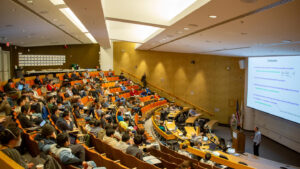
When comparing LED walls vs projectors, the decision hinges on auditorium purpose, lighting conditions, and budget.
-
Choose LED Walls if:
-
Your auditorium hosts diverse events in varying lighting conditions.
-
You want maximum audience impact and long-term ROI.
-
You aim to attract external bookings by offering top-tier visuals.
-
-
Choose Projectors if:
-
Your events are primarily in dark, cinema-like environments.
-
You have a limited budget and need flexibility.
-
Portability is a priority.
-
Ready to transform your auditorium into a state-of-the-art venue?
Contact NetworkTen today for expert AV integration, networking, and smart automation solutions tailored to your space. Let’s build India’s most impactful auditoriums — one display at a time.