

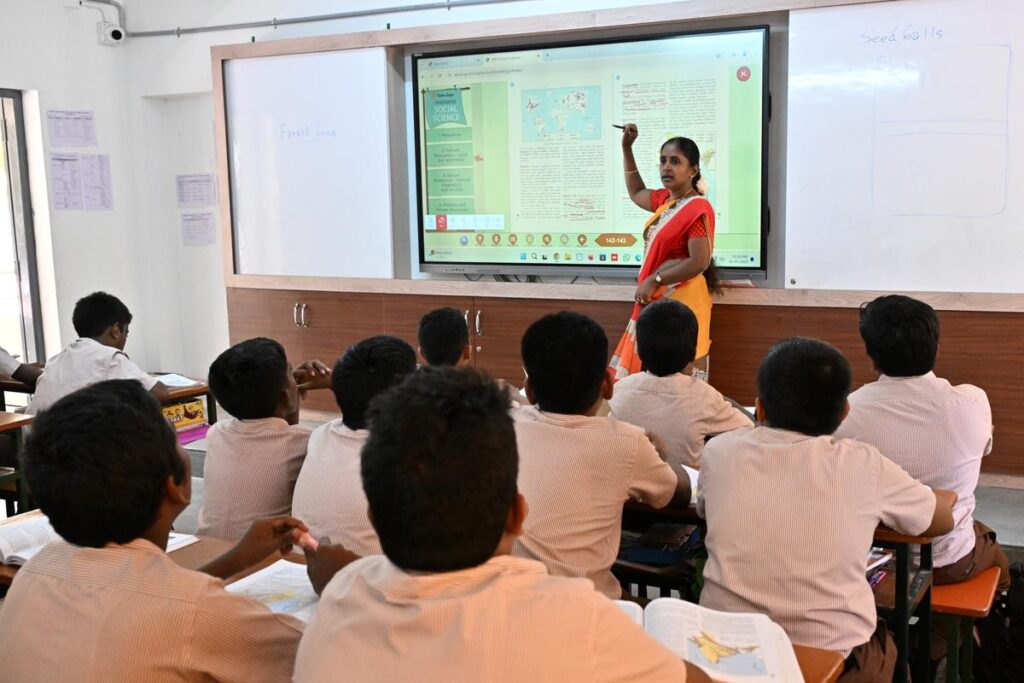
How Smart Classrooms Are Changing Education in 2025
Table of Contents
- Introduction: The Rise of Smart Classrooms in 2025
- Key Features of Smart Classrooms in 2025
- How Smart Classrooms Improve Student Engagement
- Role of AI & Automation in Modern Classrooms
- Benefits of Smart Classrooms for Teachers & Institutions
- Future of Education: What’s Next After 2025?
- Conclusion
Introduction: The Rise of Smart Classrooms in 2025
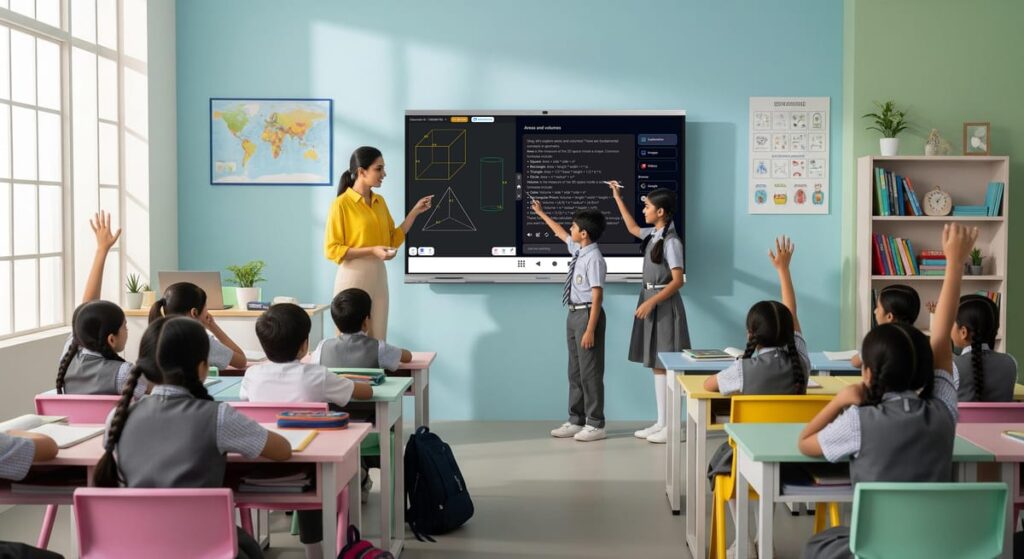
Education has always been the foundation of human progress. But in 2025, the way students learn and interact with knowledge is undergoing a revolutionary transformation, thanks to Smart Classrooms in 2025.
Traditional chalk-and-board teaching methods are giving way to technology-driven classrooms that combine networking, audio-visual solutions, artificial intelligence, and cloud-based learning platforms. These innovations are making classrooms more interactive, personalized, and future-ready.
According to global EdTech reports, over 70% of institutions in India and worldwide are now adopting some form of smart classroom technology. This shift is not just a trend—it’s a fundamental reimagination of education itself.
Key Features of Smart Classrooms in 2025
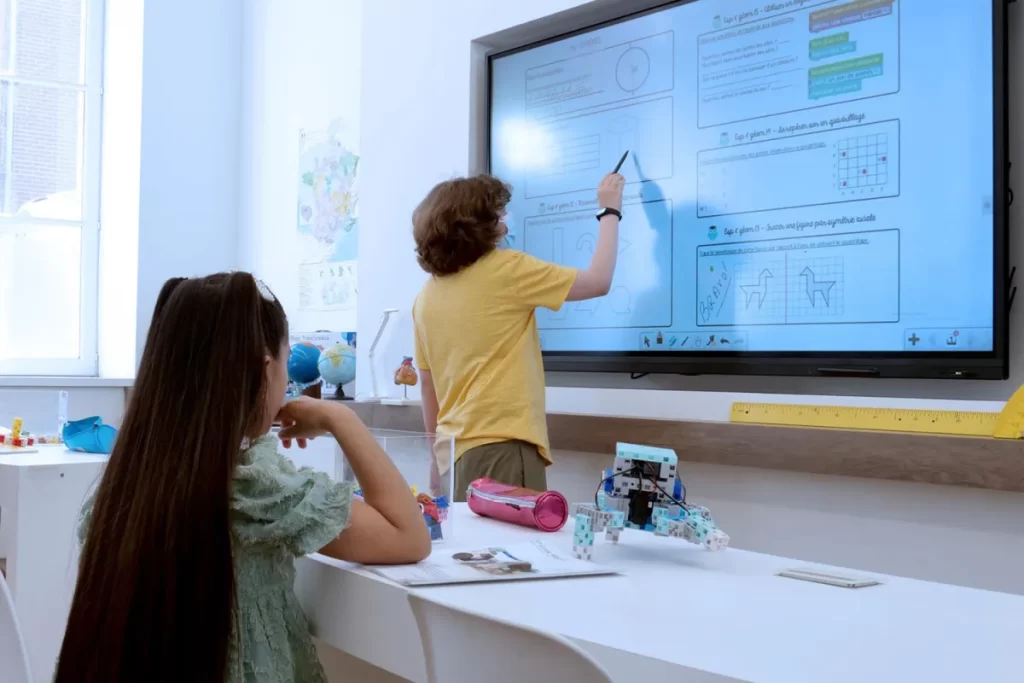
Smart classrooms today go far beyond simple projectors or online lessons. They integrate cutting-edge technologies that redefine how students and teachers interact with knowledge.
a) Interactive Whiteboards & Smart Boards
Instead of static blackboards, classrooms now use touch-enabled digital boards that allow teachers to write, display 3D models, play videos, and annotate live. Students can also connect their devices and collaborate in real-time.
b) High-Speed Networking & AV Solutions
A fast and secure network forms the backbone of modern education. From high-definition video conferencing to cloud-based storage of assignments, reliable networking ensures seamless learning experiences. Institutions in 2025 rely on enterprise-grade Wi-Fi 7, LAN setups, and advanced audio-video systems for smooth collaboration.
c) Cloud-Based Learning Platforms
Learning is no longer restricted to the classroom walls. With cloud-based smart classroom systems, students can access lectures, notes, and assignments anytime, anywhere. Teachers can store lesson plans, track student progress, and even record lectures for revision.
d) Smart Security & Monitoring
Institutions today prioritize safety. Biometric attendance, AI-enabled CCTV, and access control systems are now part of classroom infrastructure. This ensures a secure and controlled environment for learning.
e) Integration of IoT Devices
From smart lighting that adjusts based on natural light to voice-controlled AI assistants that help with classroom tasks, IoT integration is making smart classrooms energy-efficient, interactive, and student-friendly.
How Smart Classrooms Improve Student Engagement
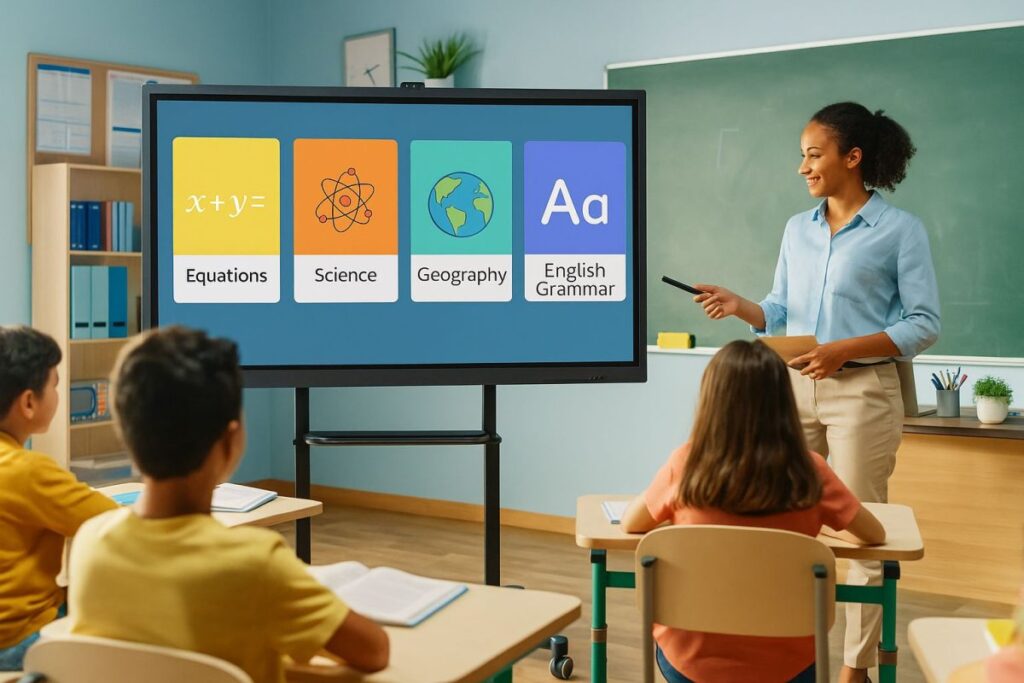
Artificial Intelligence (AI) and automation are at the heart of the smart classroom revolution. By 2025, they are no longer futuristic concepts—they are practical tools that shape everyday education.
a) Personalized AI Tutors
AI-driven apps and platforms act like virtual teaching assistants, tailoring learning experiences to each student’s pace and style. These AI tutors help students solve doubts, revise topics, and practice problem-solving anytime.
b) Automated Attendance & Monitoring
Gone are the days of manual roll calls. Facial recognition and biometric attendance systems ensure accurate, fast, and secure tracking of student presence.
c) Smart Security Systems
AI-enabled cameras and alarms provide real-time threat detection and keep institutions safe. This is especially vital for large campuses and schools with thousands of students.
d) Predictive Analytics
Institutions use AI to predict academic performance and recommend personalized learning paths. This helps educators identify struggling students before they fall behind.
e) Classroom Automation
Automation tools now handle repetitive tasks—like turning on projectors, adjusting lighting, or scheduling lessons. This allows teachers to focus more on teaching and mentoring rather than administration.
Benefits of Smart Classrooms for Teachers & Institutions
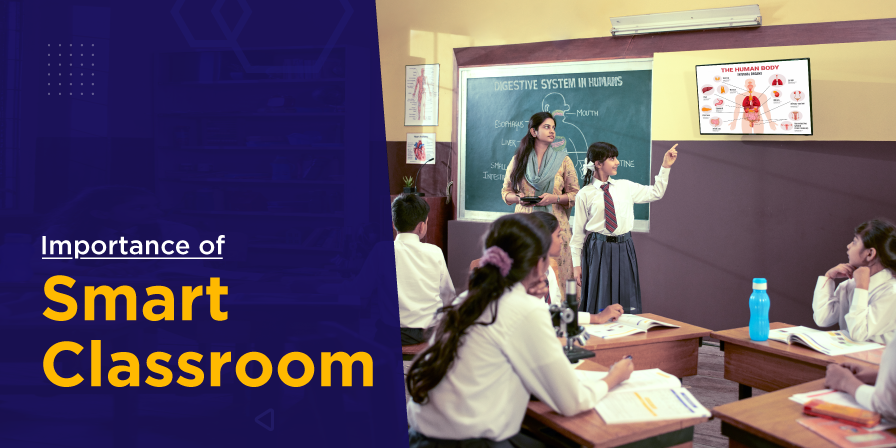
The advantages of Smart Classrooms in 2025 extend beyond students. Teachers and institutions are experiencing a significant boost in efficiency, management, and results.
a) Better Classroom Management
Smart systems help teachers manage time, track performance, and monitor behavior more efficiently. Automated systems reduce workload and improve focus on actual teaching.
b) Data-Driven Insights
Smart classrooms collect and analyze real-time learning data, helping teachers customize their methods. This improves results and ensures no student is left behind.
c) Enhanced Teacher-Student Collaboration
Digital platforms allow teachers and students to communicate beyond class hours. Assignments, feedback, and discussions continue seamlessly.
d) Hybrid Learning Support
Institutions adopting smart classrooms can offer blended learning programs. This flexibility attracts more students and adapts to different learning preferences.
e) Scalability & Cost Efficiency
Though the initial investment is high, smart classrooms save money long-term by reducing paper use, cutting admin costs, and improving resource efficiency.
Future of Education: What’s Next After 2025?

The evolution of education doesn’t stop in 2025. Smart classrooms are only the beginning of a much larger transformation.
a) AR/VR Classrooms
By 2030, augmented and virtual reality will allow students to explore historical events, conduct virtual science experiments, or visit international museums—all from their classroom.
b) AI Tutors & Virtual Labs
AI will evolve into fully capable digital tutors that can replace or assist human teachers for certain tasks. Virtual labs will allow students to conduct complex experiments without expensive equipment.
c) Blockchain in Education
Certificates, student records, and academic achievements will be stored on blockchain, ensuring security and authenticity.
d) Sustainable Education Technology
Green smart classrooms will rely on solar panels, energy-efficient devices, and digital tools to promote sustainability.
e) Global Collaborative Classrooms
Future classrooms will connect students from different parts of the world, enabling cross-cultural learning experiences in real-time.